What To Expect During Comprehensive Structural Oral Restoration Journeys
For millions of people around the world, a smile is something they take completely for granted. However, for individuals who are dealing with widespread missing teeth, advanced decay, or severe degradation of the jawbone, daily activities like eating, speaking, and smiling can become painful and embarrassing chores. When oral health reaches a point of major structural collapse, standard single-tooth fixes like a simple filling are no longer enough to solve the problem.
This is where a comprehensive structural oral restoration journey comes into play. Often referred to by clinical teams as full-mouth reconstruction, this process is not a single, quick cosmetic procedure. Instead, it is a highly detailed, multi-phase therapeutic journey that rebuilds both the physical function and aesthetic appearance of your mouth from the skeletal foundation up. Stepping into this process can feel overwhelming, but understanding the timeline, the engineering steps, and what happens at each stage can turn fear into excitement. This comprehensive guide will provide you with a clear roadmap of what to expect as you transform your health and your life.
Find Your Master Planner and Complete a Total Visual Mapping

Before any physical work can begin inside your mouth, your clinical team must create a master architectural blueprint for your face. You cannot build a durable structure without assessing the ground it sits on, and the exact same rule applies to your smile. The initial diagnostic phase is focused entirely on gathering highly detailed three-dimensional data about your jaws, joints, gums, and teeth to see how they all interact as a unified biological system.
During this stage, you will spend a significant amount of time undergoing advanced imaging. Your team will take digital impressions, high-definition facial photographs, and specialized scans that map the exact position of your jaw joints. This data allows the clinician to figure out where your teeth should ideally sit to maximize your chewing power while preventing chronic head and neck pain.
To make sure your diagnostic phase sets you up for long-term success, focus on these essential preparation tips:
- Select a technologically advanced workspace: It is vital to choose a modern dental office that utilizes advanced cone-beam computed tomography scanners. These machines create precise 3D views of your bone density, nerve pathways, and sinus cavities.
- Prioritize neuromuscular evaluation: Make sure your clinical team looks closely at how your jaw muscles move. If your new teeth are built too high or too low, it can cause severe joint strain and break your new prosthetics.
- Inquire about digital smile design: Many modern clinics can show you a digital simulation of what your final smile will look like on a computer screen before they even touch a tooth.
- Verify advanced clinical training: Seek out an expert who has dedicated their career to the art and science of full-mouth reconstruction, prosthodontics, or complex restorative dentistry. This advanced knowledge ensures they can balance your bite safely.
This initial phase requires patience, as your doctor may spend several weeks analyzing your records and printing physical plastic models of your jaws. This careful preparation is what separates a fragile cosmetic fix from a robust, life-changing structural restoration. Once the master plan is finalized, you will know the exact sequence of your upcoming treatment sessions.
Eliminate Infections and Salvage Restorable Tissue First
Once the master plan is locked in, the first active clinical step is to clear away any active biological disease. You cannot build a beautiful new house on top of a crumbling, muddy foundation. If you try to place high-end restorations on top of infected roots or active decay, the underlying bacteria will eventually destroy your investment. This phase is all about stabilization, pain management, and clean-up.
Your clinician will methodically work through your mouth to address the most urgent problems first. Teeth that are completely fractured, loose, or dead will be gently extracted to prevent dangerous infections from spreading into your bloodstream. At the same time, teeth that are damaged but still structurally sound will be carefully cleaned out and repaired so they can be preserved to help support your future bite.
To understand how your team will stabilize your oral health during this phase, expect the following procedures:
- Systematic decay removal: The doctor will open up every tooth that has a deep tooth cavity to scoop out soft, infected enamel. They will seal these teeth with strong, temporary medicated materials to halt the spread of the breakdown.
- Periodontal deep cleaning: If you have active gum disease, your hygienic team will perform intensive cleanings beneath the gum line to remove calcified plaque and bacteria that cause bone loss.
- Root preservation therapies: If a heavily damaged tooth still has a rock-solid root embedded in your jaw, the doctor may perform a precision root canal procedure. This clears out dead nerve tissue from the center of the root, disinfects the interior channel, and seals it tight.
- Immediate temporary placements: You will never be forced to leave the clinic without teeth. Immediately after any necessary extractions, you will be fitted with specialized, highly aesthetic temporary teeth that allow you to smile and talk while your tissues heal.
Stabilizing your mouth can take anywhere from a few weeks to a couple of months, depending on how long the active infections have been neglected. While it might feel like you are taking a step backward when teeth are removed, clearing the biological playing field is absolutely essential for creating a healthy environment where modern materials can thrive.
Maximize Tissue Density to Support Long-Term Hardware Success
After your mouth is completely free of infection and decay, the focus shifts to the skeletal structure beneath your gums. When a tooth is missing for a long time, the surrounding jawbone no longer receives the mechanical stimulation of chewing. Because our bodies are highly efficient, the bone tissue in that empty space begins to naturally dissolve and shrink away over time.
If your jawbone has lost significant height and width, it will not be strong enough to hold the heavy-duty titanium anchors needed to support your new teeth. To fix this, your clinician must perform specialized structural rebuilding procedures to restore the lost volume of your jaw frame. This is a critical engineering phase that requires immense surgical skill and a deep understanding of human anatomy.
Consider these important tips and insights as you navigate the skeletal rebuilding stage of your restoration:
- Partner with a tissue specialist: For complex cases involving massive bone loss or receded gums, it is highly beneficial to have a certified periodontist manage the surgical reshaping of your hard and soft tissues.
- Understand the bone-building process: If your jaw is too thin, the surgeon will perform a dental bone grafting procedure. This involves placing microscopic mineral granules into the weak areas to encourage your body to grow fresh, living bone tissue.
- Allow for quiet healing blocks: Bone tissue grows at a very slow and deliberate pace. You must be prepared to wait anywhere from three to six months for the graft material to fully integrate and harden into solid bone.
- Protect the surgical sites: During this crucial healing window, you must follow a soft-food diet and avoid putting direct, heavy pressure on the healing areas so the new bone frame can form without interruption.
Rebuilding the skeletal foundation of your mouth is often the longest phase of a comprehensive oral restoration journey. It requires a significant amount of patience from the patient. However, cutting corners during this stage is the number one reason why major restorations fail later in life. Taking the time to build a thick, dense bone foundation guarantees that your upcoming hardware will remain locked solidly in place for decades.
Understand the Mechanical Placement of Your New Roots
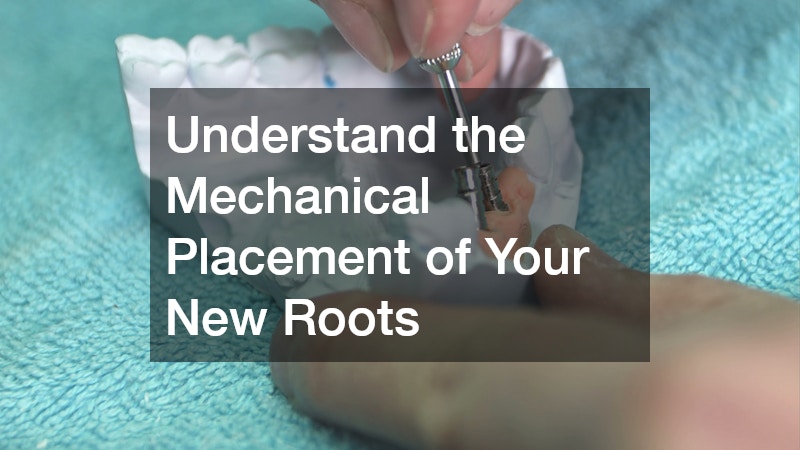
Once your jawbone has achieved the perfect density and structural volume, your clinical team can finally begin the process of anchoring your permanent new tooth roots. This is the true engineering core of the entire restoration journey. Instead of relying on old-fashioned, removable plastic dentures that sit loosely on top of the gums, modern structural restorations utilize biocompatible metal posts that lock directly into the skeleton.
The placement of these anchors is done using precision surgical guides that are manufactured directly from your initial 3D computer scans. This computer-guided surgery ensures that each anchor is placed at the exact depth and angle needed to avoid major nerves and sinuses while maximizing your biting force. The surgery is typically done under deep sedation, meaning you will sleep comfortably through the entire process.
To align your expectations with this crucial anchoring phase, keep these key points in mind:
- Invest in permanent biocompatible roots: The team will strategically place state-of-the-art dental implants into your newly strengthened bone. These titanium posts fuse permanently with your natural skeleton through a biological process called osseointegration.
- Expect a major construction period: Think of this phase as intense dental construction for your face. While the metal anchors are fusing with your jaw beneath the surface, you will wear highly engineered temporary bridges that protect the surgical sites.
- Manage post-surgical swelling: It is completely normal to experience minor bruising, swelling, and mild discomfort for a few days after the anchors are placed. Ice packs and prescribed medications will keep this completely manageable.
- Maintain flawless oral hygiene: Even though titanium cannot get cavities, you must keep the surgical sites immaculately clean using specialized, gentle rinses to prevent bacteria from irritating the healing gums around the new hardware.
The fusion process between the titanium posts and your natural living bone usually takes around three to four months. During this quiet waiting period, you can go about your normal daily life, working and socializing with your durable temporary teeth. Beneath the surface, your body is working hard to turn those metal anchors into an unbreakable part of your facial skeleton.
Fine-Tune Your Bite and Protect Your Lifelong Investment

The final phase of your comprehensive oral restoration journey is undoubtedly the most rewarding and exciting. Once your doctor verifies that your titanium anchors are completely fused to your bone, it is time to remove your temporary appliances and build your permanent, final teeth. This stage is a beautiful blend of high-end manufacturing, master artistry, and mechanical calibration.
Your final teeth are custom-crafted by master laboratory technicians using incredibly strong materials like zirconia or porcelain fused to precious metals. These materials are chosen because they mimic the natural translucency of real enamel while possessing the strength to withstand thousands of pounds of chewing pressure over a lifetime. Each tooth is hand-shaped and custom-shaded to match your facial features, skin tone, and personal preferences.
When you reach this final milestone, expect the following detailed steps to occur:
- Individual tooth preservation: For natural teeth that were saved by root canals earlier in the journey, the doctor will precisely reshape the top structure and place a custom-milled ceramic dental crown over them to match your new look.
- Bite calibration sessions: The doctor will have you chew on specialized digital sensor paper to map out your bite pressure. They will make tiny, microscopic adjustments to ensure that your top and bottom teeth meet perfectly at the exact same millisecond.
- Final permanent bonding: Once you and your doctor are completely thrilled with the fit, feel, and appearance, the new teeth are permanently screwed or cemented onto your anchors.
- Establish a lifetime care routine: A great dentist will not simply say goodbye once your smile is attached. They will design a customized preventative hygiene plan, which includes using specialized water flossers and scheduling routine checkups to protect your new investment.
Stepping out of the clinic with your completed restoration is an unforgettable emotional experience. You will instantly notice a massive difference in how you chew, how you speak, and how people interact with you. Your mouth will no longer be a source of chronic pain or self-consciousness, but a healthy, functioning asset that enhances your overall well-being.
Conclusion
A comprehensive structural oral restoration journey is undeniably a major undertaking that requires a significant commitment of your time, patience, and financial resources. It is not an overnight fix, but a highly coordinated medical and engineering process designed to reverse decades of structural damage, severe infection, and advanced bone loss. By breaking the journey down into distinct, logical steps, you can see that every single phase serves a vital purpose in securing your long-term success.
From the initial 3D digital blueprints and the elimination of active infections, to the rebuilding of your jawbone and the placement of permanent biocompatible anchors, this process cures the root causes of oral decline. The ultimate reward at the end of this journey is far more than just a beautiful set of white teeth. It is a complete return to structural health, giving you the ability to eat whatever you want, speak with absolute clarity, and share your smile with the world without a single trace of hesitation.